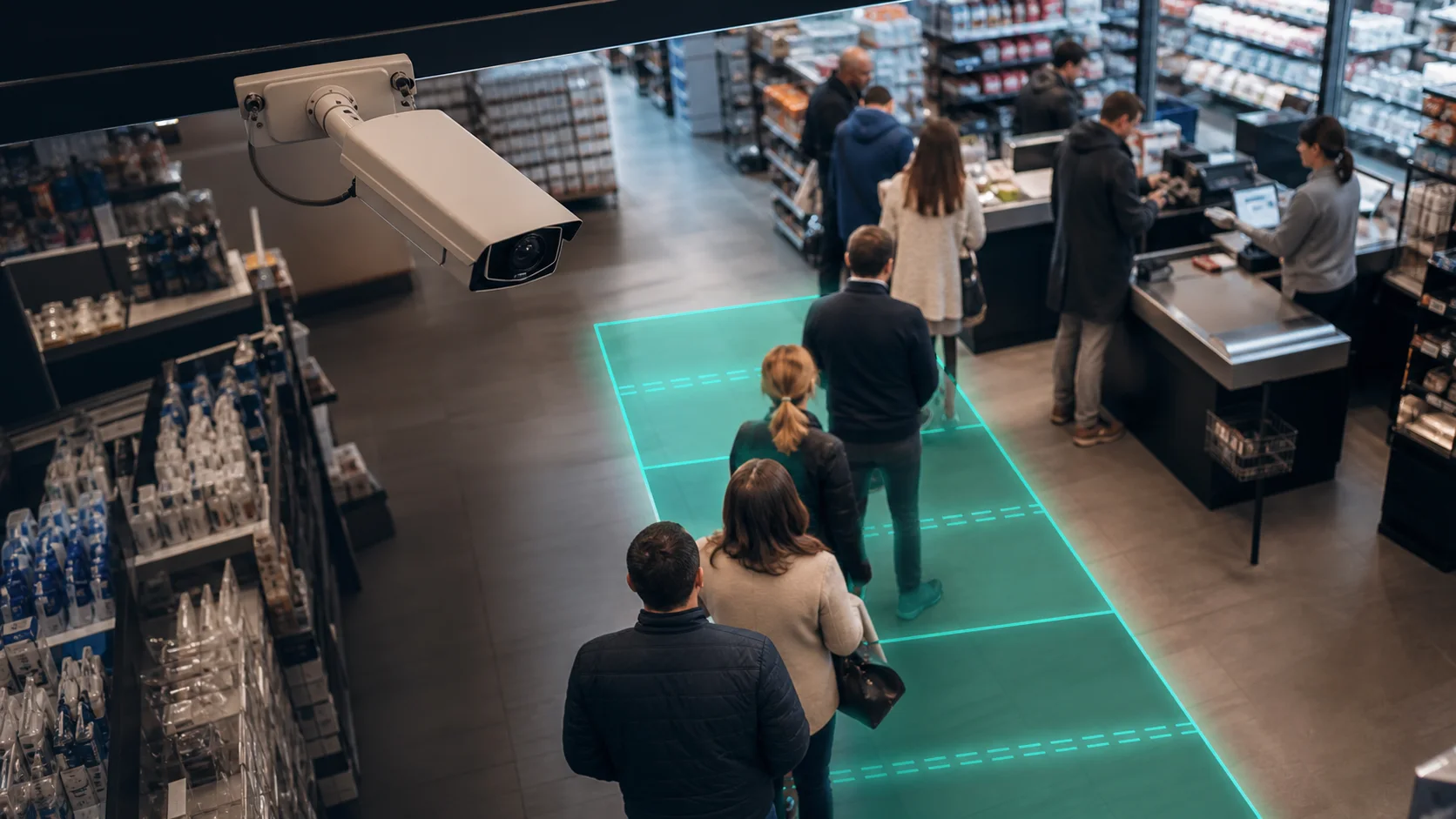
Queue problems are easy to feel and hard to measure. Customers complain, staff open another till too late, and managers only see the pattern after the day is over. Queue management analytics fixes that by measuring queue length, wait time, and abandonment while the operation is still happening. It is one of the clearest applications of AI video analytics software for physical operators.
The important part: you do not need a new sensor network to start.
Existing CCTV is already in the right place
Most stores, clinics, warehouses, and venues already have cameras pointed at entrances, checkouts, service counters, or loading bays. Those views are often enough to measure queue activity if the analytics layer can read a standard IP camera stream.
Horus connects to existing cameras, lets you draw a queue zone, and tracks whether the queue is building, shrinking, or crossing an alert threshold. The processing happens on-premise, so footage stays inside your network.
What camera-based queue analytics measures
Useful queue analytics should report more than a raw person count. Operators need signals that lead to action:
- Queue length by zone
- Average wait time
- Queue abandonment
- Threshold alerts when a line becomes too long
- Peak queue periods by hour and day
- Comparison between locations, shifts, or service counters
Those signals help managers schedule staff, open checkout lanes sooner, and quantify the cost of delay.
Why this differs from virtual queue software
Many queue-management tools are designed for appointments, ticketing, or digital check-in flows. That works in banks, clinics, and public-sector offices, but it does not solve every physical queue. Retailers and small operators often need to understand the queue that is already forming in front of a till, desk, counter, or bay.
Camera-based analytics is a better fit when the queue is visible, spontaneous, and operational.
How to deploy it safely
Start with one queue zone and one simple rule: alert staff when the line exceeds your chosen threshold for more than a few minutes. Once the alerts are useful, add reporting for wait time and abandonment.
For privacy, keep processing on-premise wherever possible. Horus sends structured analytics and alerts, not raw video, which makes the workflow easier to manage under GDPR and internal data policies.
Next step
See the dedicated queue management analytics page for the full workflow and supported industries.