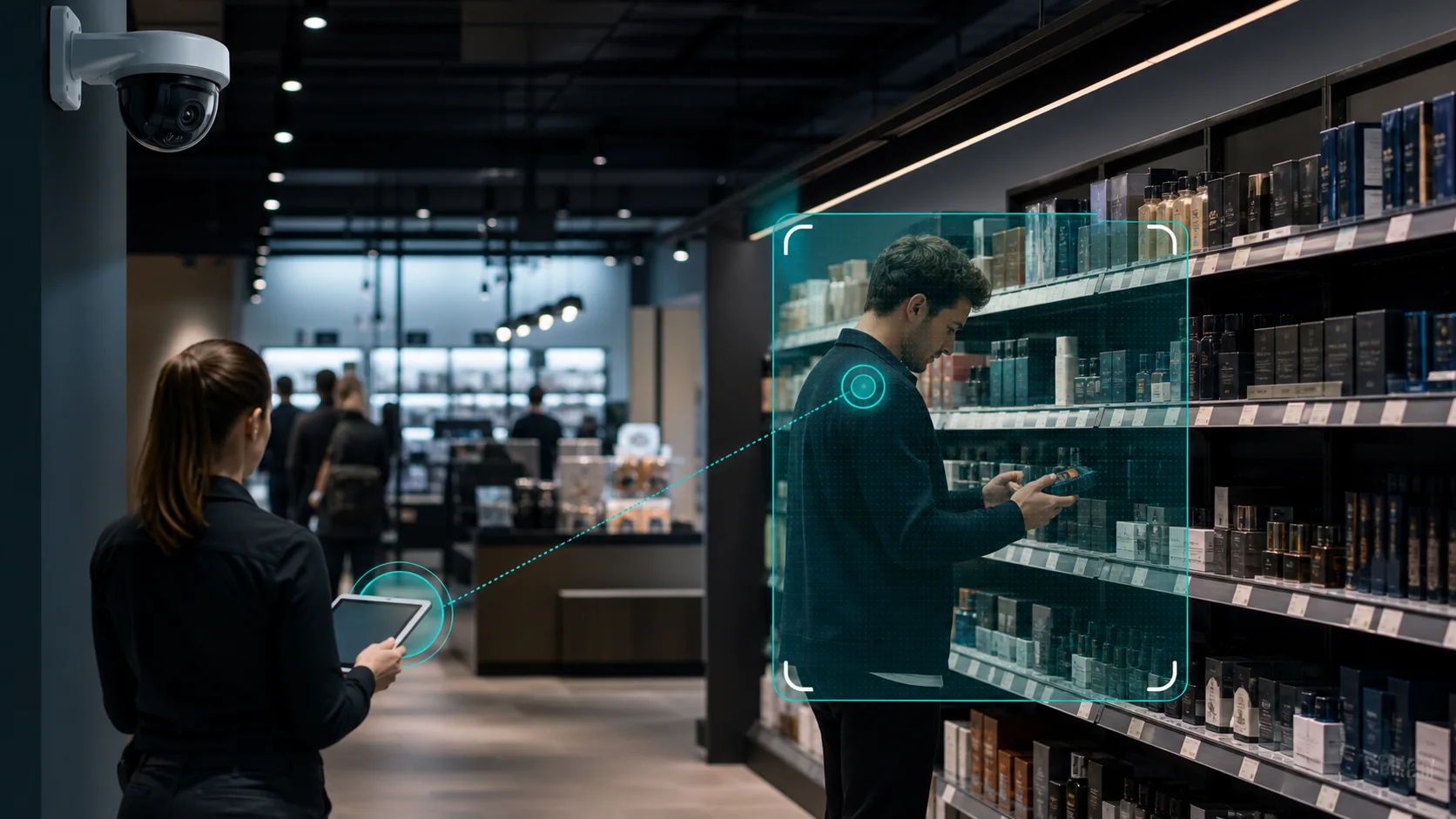
Shoplifting detection cameras do not just record theft. They flag it as it happens. AI analyses live video from your existing CCTV, spots behaviours that match theft patterns, and sends an alert to your phone or screen before the person leaves the store.
Here is how the technology works and what to look for if you are evaluating it for your shop.
Why standard CCTV is not enough
A standard CCTV system records everything and tells you nothing. It is evidence after the fact - useful for police reports, not for preventing the loss in the first place.
The problem is not the cameras. It is that someone has to watch them, and nobody can watch 12 feeds simultaneously for eight hours without missing things. Human operators miss incidents even when the footage is right in front of them because attention drops, screens compete for focus, and most theft signals are brief.
AI shoplifting detection fixes this by watching the footage automatically, continuously, and without fatigue.
How AI detects shoplifting
Modern shoplifting detection does not rely on simple motion triggers or object detection alone. It analyses behaviour patterns: the sequence of actions that correlate with theft.
Behaviours that AI shoplifting detection cameras can flag include:
Concealment motions - reaching into a bag, turning away from the camera, or adjusting clothing immediately after handling an item. These are identified from posture and body movement, not from the item itself.
Repeated shelf interaction without purchase - multiple visits to the same product area without picking anything up or moving toward checkout. Combined with hesitation and scanning behaviour, this can be a strong pre-theft signal.
Loitering in low-traffic zones - extended time in aisles away from main traffic without typical shopping behaviour such as picking up items, reading labels, or comparing prices.
Unusual bag or clothing interaction - frequent bag opening near shelves, or items disappearing from view while still in the aisle.
When the AI detects one of these signals, it sends a real-time alert, typically with a short clip or snapshot, so staff can act before the person reaches the exit.
What to look for when buying
Not all shoplifting detection cameras are the same. When evaluating systems, these are the questions that matter for SMB retailers.
Does it work with cameras you already own? Most retail operators have functional CCTV. The best systems layer AI on top of existing infrastructure: no rip-and-replace, no new hardware costs. Horus connects to your existing cameras and NVR, regardless of brand or age.
Where does the AI processing happen? Cloud-based systems send footage to a remote server for analysis. On-premise systems process everything locally. For retailers handling customer footage, on-premise is often the stronger choice: lower latency for alerts, no monthly bandwidth costs, and data that never leaves your building.
How configurable are the alert zones? A detection system that alerts on everything is as useless as one that alerts on nothing. Look for the ability to define specific zones such as the stockroom entrance, high-value display areas, and the fitting room corridor, then set different sensitivity levels per zone. Our guide to retail foot traffic analytics covers zone configuration in more detail.
What is the false positive rate? Every system generates some false alarms. The question is how many. Behaviour-based systems that require multiple signals to trigger an alert will generate fewer false positives than motion-only systems. Ask vendors for real-world accuracy figures, not just headline percentages.
Does it integrate with your existing workflow? Alerts should arrive where your staff are: phone, tablet, or a monitor at the service desk. Systems that require logging into a separate platform will get ignored.
What this costs and what you save
Retail shrinkage averages 1.5-2% of revenue across the sector. For a store turning over GBP 500,000 a year, that is GBP 7,500-10,000 walking out the door annually. Even a 30% reduction in shrinkage can pay for most systems within a few months.
On-premise AI camera analytics typically costs significantly less than enterprise loss prevention platforms, which are built for retail chains with dedicated security teams. For SMB operators, the relevant comparison is not enterprise software. It is the cost of an additional member of staff to monitor CCTV manually.
Getting started
The most practical starting point is configuring detection on your two or three highest-risk zones, the areas where shrinkage is concentrated, rather than trying to cover every camera from day one. This keeps alert volume manageable while staff get familiar with the system.
Horus works with your existing cameras and runs on-premise, so your footage stays in your building. AI camera analytics software that does not require new hardware is the fastest path to real-time shoplifting detection without a major capital outlay.