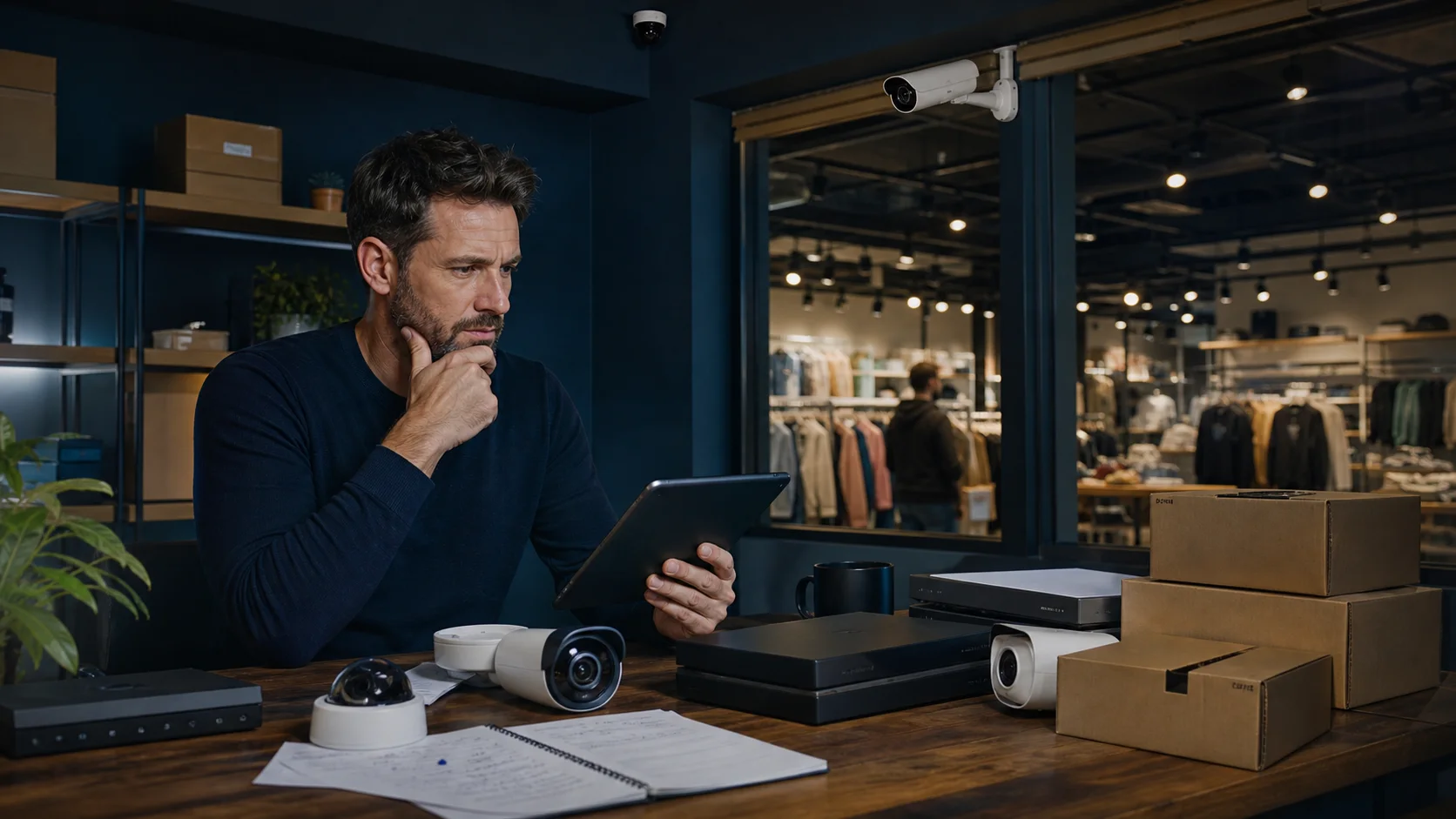
Verkada has announced pricing changes effective June 5, 2026, with increases reported across hardware and licenses. For a large enterprise that wants a single-vendor cloud security stack, that may be absorbable. For an SMB retailer with working cameras already on the walls, it is a useful moment to ask a sharper question: do you need to replace your CCTV estate to get AI analytics?
Most retailers do not. They need queue alerts, entrance counts, loss-prevention zones, staff-area monitoring, and clear weekly signals about what is happening in the store. Those workflows can run on existing IP cameras if the AI video analytics software is designed around open camera feeds rather than proprietary hardware.
What changed for SMB buyers
The pricing shift matters because camera platforms have two cost layers: the hardware you buy and the subscription you keep paying. If the vendor requires proprietary cameras, price movement affects every new site, every replacement camera, and every expansion plan.
For a small retailer, the practical risk is not only the invoice. It is lock-in. Once cameras, cloud storage, licenses, and access control are tied to one vendor, switching costs rise every year.
What to compare before renewing
Start with five questions:
- Can the system use the cameras you already own?
- Does video need to leave your site for AI analytics to work?
- Are you paying for security features when your real need is store operations?
- Can one location prove value before a chain-wide rollout?
- Does the monthly cost stay predictable as camera count grows?
If the answer to most of those questions is "no", a cloud camera platform may be more system than you need.
Where an on-premise alternative fits
Horus is built for operators who want AI analytics on existing CCTV. The software runs on-premise, connects to standard IP camera streams, and turns zones into real-time alerts and reports. Video stays on your site, which reduces bandwidth load and helps with GDPR and franchise data policies.
For SMB retail teams, the most valuable workflows are usually:
- Queue length and wait-time alerts
- Footfall and entry counts
- Restricted area and stockroom monitoring
- Loss-prevention zones around high-value areas
- Weekly trend reports for staffing and layout decisions
Those are operational outcomes, not just camera-management features.
When Verkada may still be the right choice
Verkada can still make sense if you want a fully managed, single-vendor cloud appliance and are ready to standardise every camera on that vendor. It is strongest when the hardware refresh is part of the plan and cloud video storage is acceptable.
If you already have serviceable cameras, limited bandwidth, or a privacy requirement that says footage should stay local, evaluate an on-premise alternative before renewing.
Next step
Compare the dedicated Verkada alternative page or test Horus on one existing camera before making a wider hardware decision.